
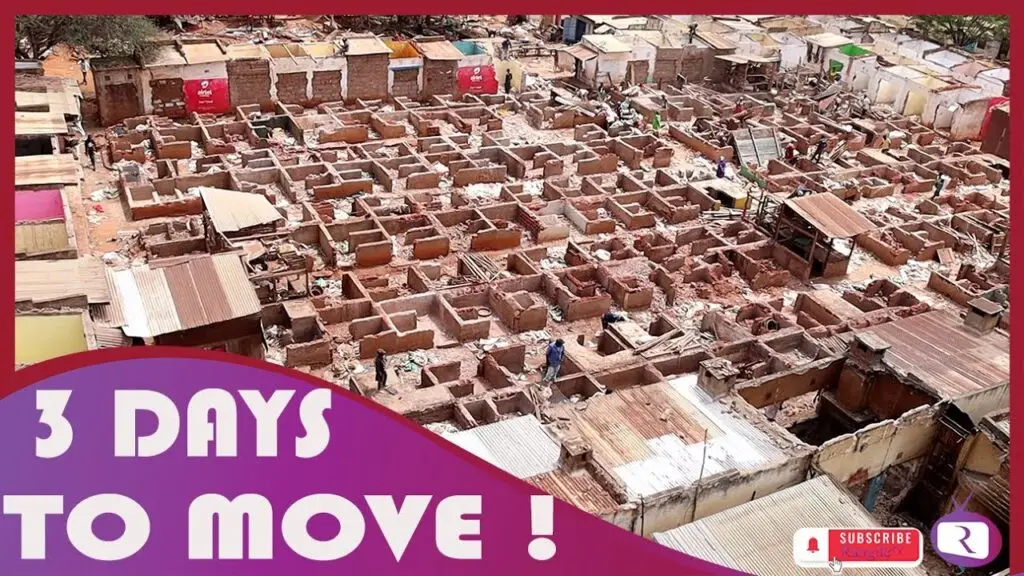

Voi Upper Market looks like a place that has just survived a storm when viewed from above. Tin sheets lie twisted on the ground, wooden stalls reduced to rubble, and dust hangs heavily in the air.There is hardly a single structure left standing. Yet this is not the aftermath of a natural disaster. It is the result of a race against time — a community dismantling its own livelihood to make way for a promised future.
On January 14, 2026, traders at Voi Upper Market received a court ruling that changed everything. After seeking more time through the courts, they were given just three days to vacate the land to pave way for the construction of a modern market by the national government. The ruling triggered a frantic scramble, forcing traders to demolish stalls many had occupied for years.
Voi Upper Market Reduced to Rubble
For decades, Voi Upper Market has been more than a trading space. It has been a meeting point, a source of income, and a place where families survived through daily sales of vegetables, cabbages, and other horticultural products. Many traders are not tenants but owners of the stalls they are now tearing down.
Armed with hammers and crowbars, traders began dismantling their own structures. From the air, the scale of the demolition is striking — no stall intact, no roof untouched. The urgency is visible on the ground too. Some traders climb onto collapsing walls and roofs, risking injury, just to beat the deadline.“We respect development,” one trader said, “but we are counting losses.” The cost of demolition is not covered by any compensation. Every nail removed, every iron sheet salvaged, comes at the trader’s own expense.
Traders Pay a Price to Leave Voi Upper Market
Adding to the pain are complaints about the high fees charged by casual labourers hired to help with demolition. With many traders desperate to meet the deadline, demand for labour has risen, pushing costs even higher. For some, the money spent demolishing stalls is almost as painful as losing the business space itself.
Faces tell the story better than words. Exhaustion is written across the traders’ expressions — eyes heavy, movements slow, but determination unwavering. They work through dust and heat, driven by fear of what could happen if they fail to vacate in time.
Temporary Relocation After Voi Upper Market Demolition
Traders dealing in cabbages and other horticultural produce have been relocated to a temporary site provided by the County Government of Taita Taveta. While the move offers short-term relief, concerns remain. The traders say the area needs better shelter, even if only temporarily, to protect their produce from sun and rain.
Business at the temporary site is slower, customers are still adjusting, and transport costs have increased. Many traders worry that prolonged stay in the makeshift location could erode their already thin margins.
Youth Find Work in the Chaos
Amid the dust and destruction, a different story unfolds. Young people from Voi have found short-term work helping traders demolish stalls. For them, the collapse of the old market means daily wages — food on the table, even if only for a short while.
They now appeal to the government to prioritize local youth when construction of the modern market begins. With the contractor expected to be officially handed over the site later this month, hopes for longer-term employment are rising.
Hope Beyond the Pain
The modern market project promises better infrastructure, organized stalls, improved sanitation, and a more dignified trading environment. Most traders support the idea of development. Their plea is simple: do not leave them behind.
They are calling on both the national and county governments to guarantee them priority when stalls are allocated once construction is complete. For them, the new market should not erase their history, but build upon it.
What the New Market Means for Voi Upper Market Traders
As Voi Upper Market disappears, its story raises a familiar question in Kenya’s development journey. Can progress be achieved without inflicting deep pain on the very people it seeks to uplift?
In the dust of the demolished market, that question lingers. As one Swahili proverb reminds us, “Maendeleo bila haki ni mzigo.” Development without fairness is a burden.
For Voi’s traders, the hope is that when the modern market finally rises, it will carry not just concrete and steel — but justice, inclusion, and dignity for those who made the old market thrive.
Also Read:Ore Land Dispute: 5 Key Moments That Stopped the Voi Housing Project